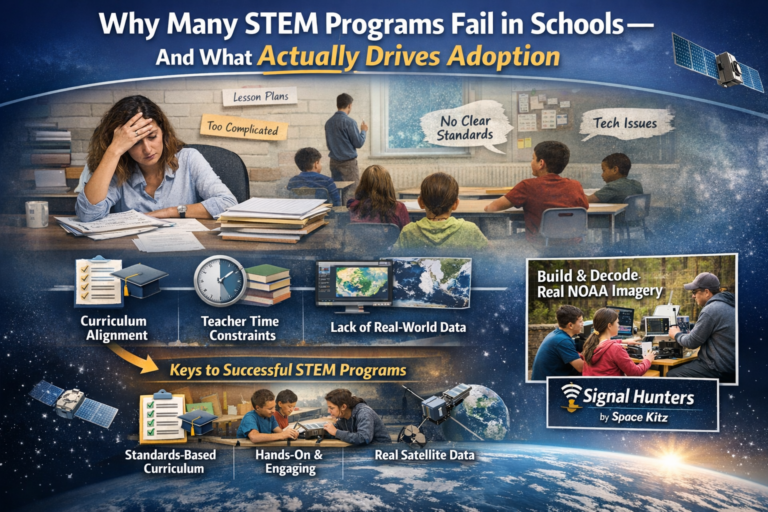
Imagine a science class where students are literally decoding signals from space and analyzing live images of Earth’s weather.
That’s the vision behind Signal Hunters, a satellite classroom kit from Space Kitz that brings satellite data for schools in real time directly to K-12 students. This innovative kit is both inspirational and practical – it turns a standard lesson into an exciting mission where young “signal hunters” can decode satellite images in class, investigate climate and weather patterns, and truly feel like space scientists. Below, we’ll explore how the Signal Hunters kit works and how it enriches STEM education with hands-on weather satellite data lessons, making complex concepts in Earth and space science accessible and fun for learners of all ages.
Bringing Live Satellite Imagery into the Classroom
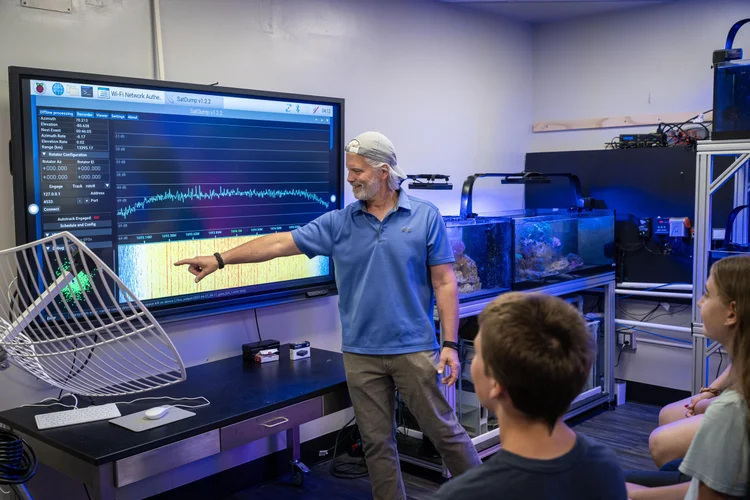
One of the most powerful aspects of the Signal Hunters kit is that it enables live satellite imagery for students. Instead of relying solely on textbook pictures or pre-recorded data, classes can receive up-to-the-minute images and measurements from actual weather satellites orbiting Earth. The kit functions as a classroom satellite dish project – students set up a real antenna and receiver to capture signals from NOAA’s operational satellites. This means a geography or science lesson can include weather satellite lesson activities where students download the latest image of a hurricane forming, or view current cloud cover over their region, all in real time. By engaging in these earth observation classroom activities, learners get a real-time earth observation experience that was once possible only in professional labs. It’s not just theory; it’s real data streaming from space into the classroom.
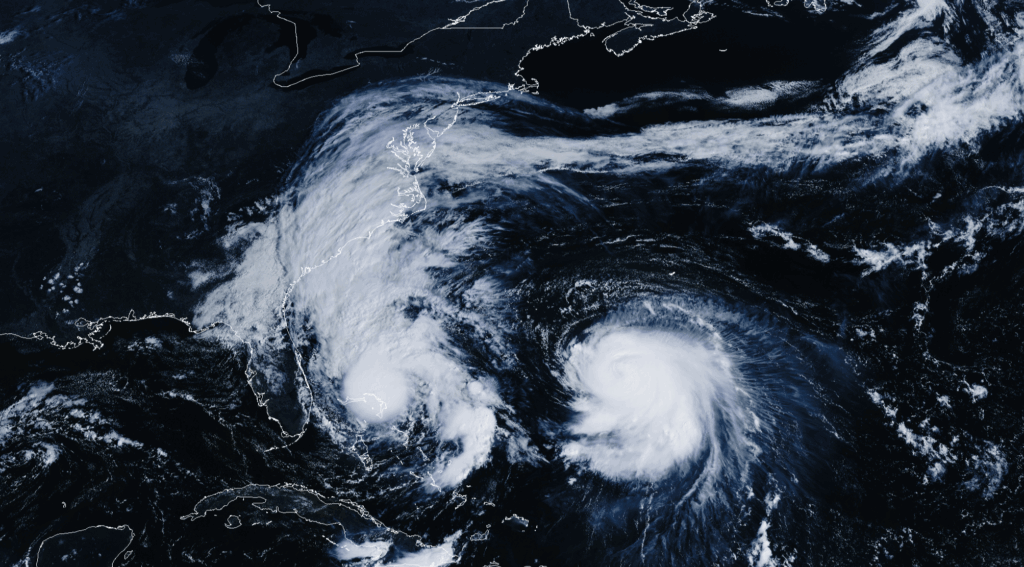
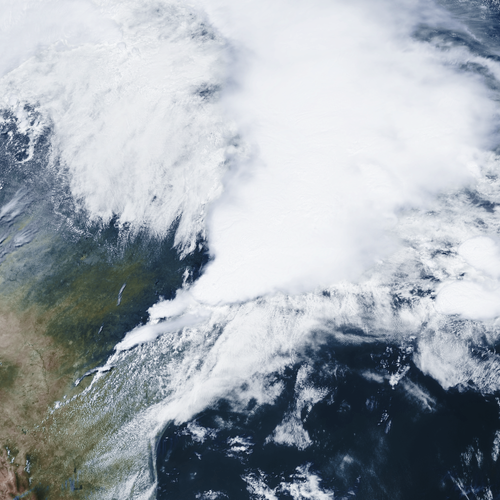
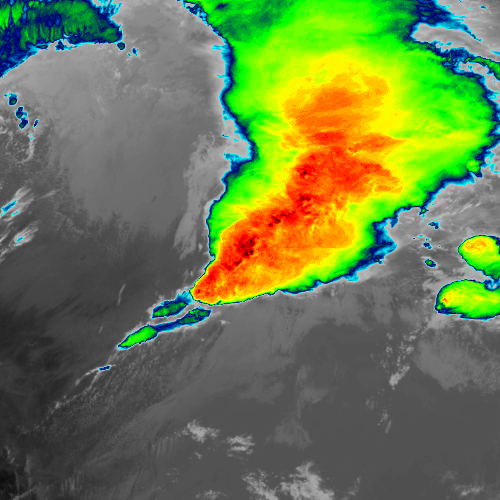
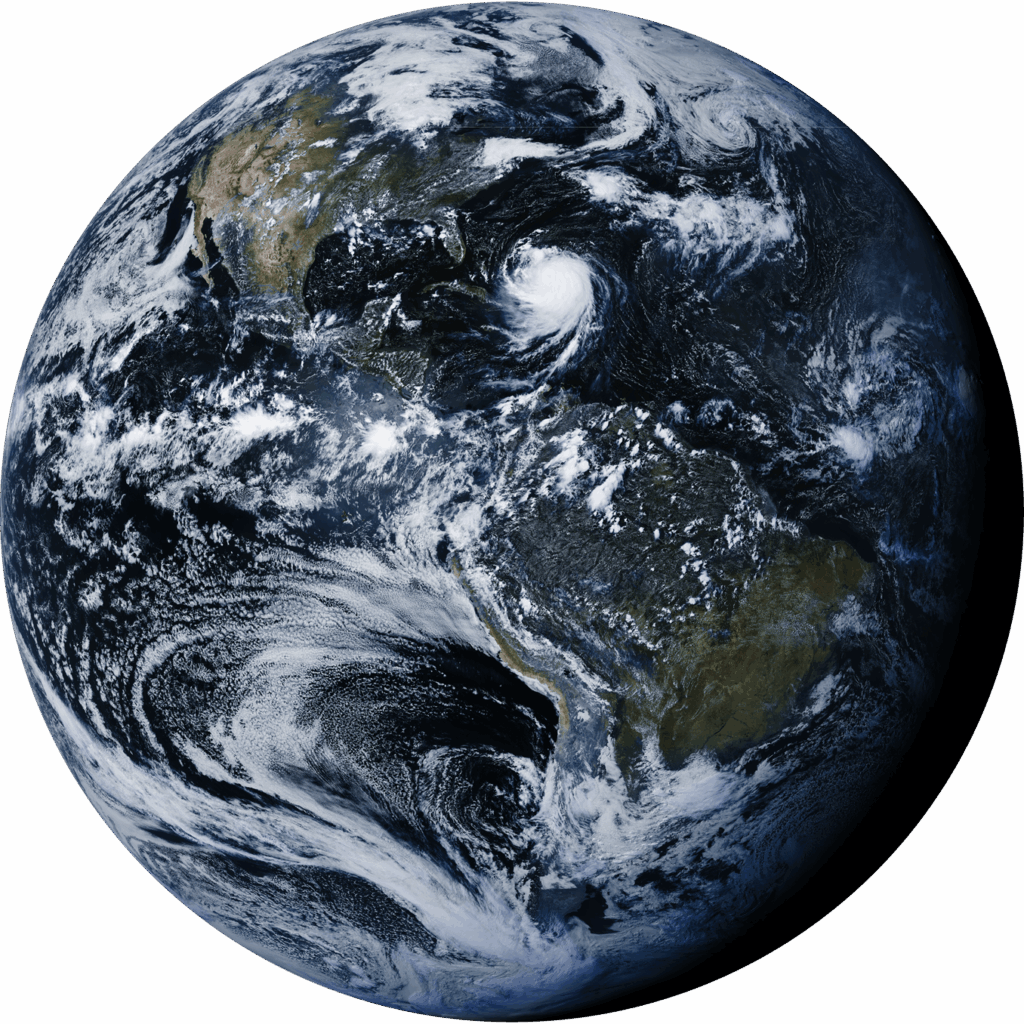
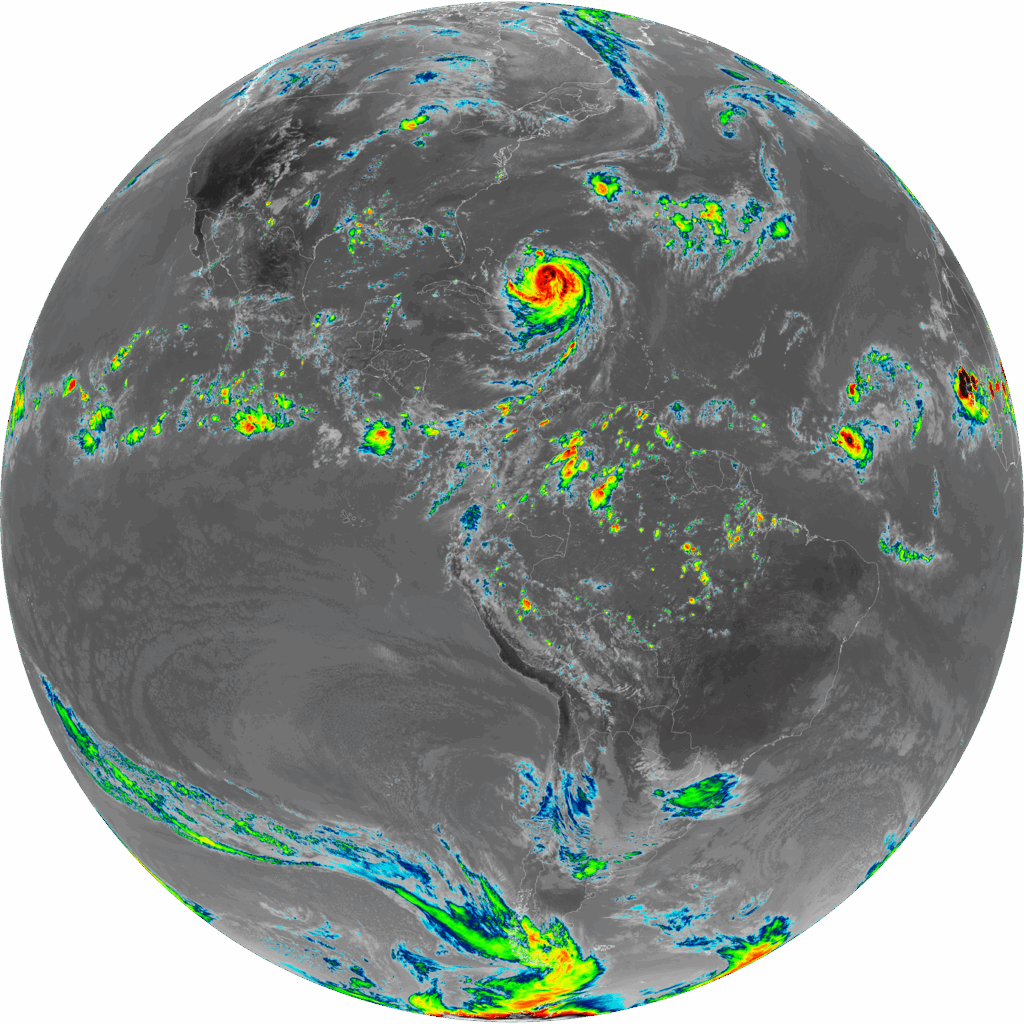
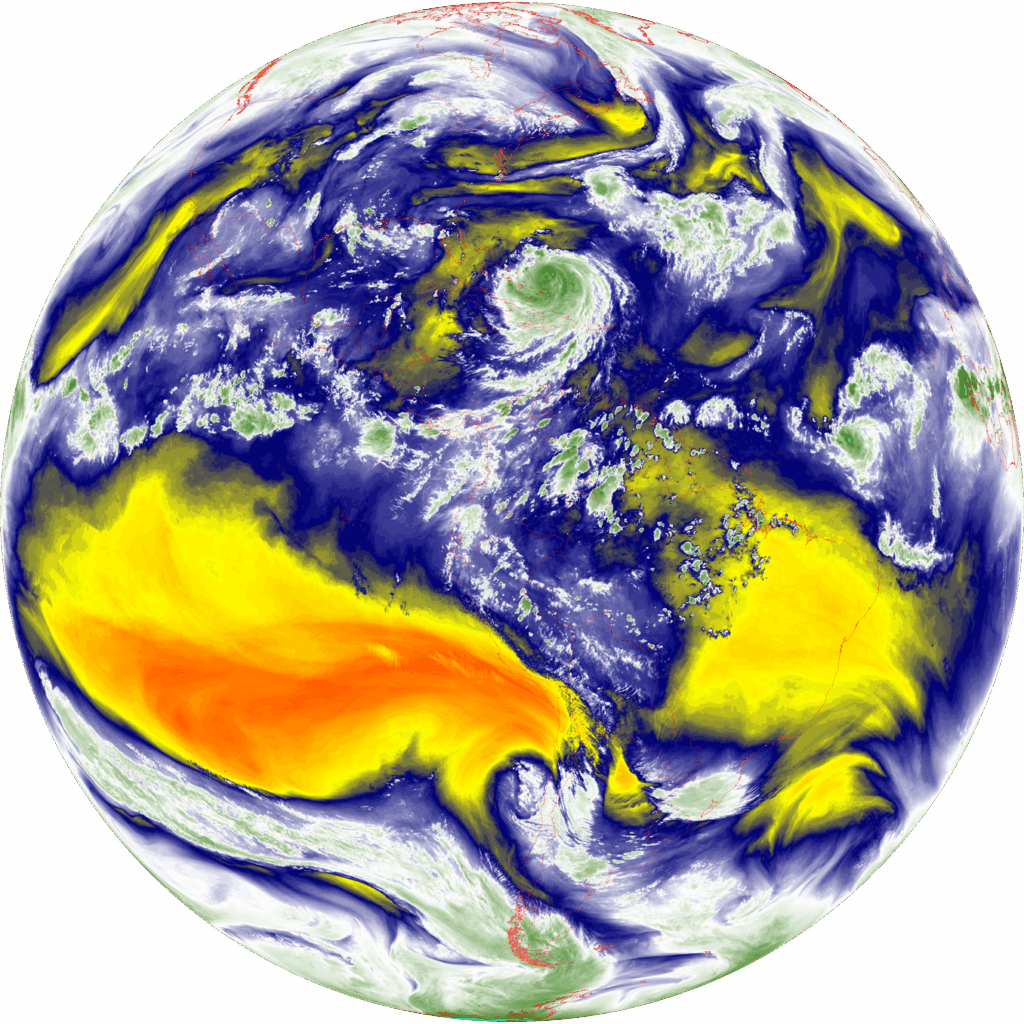
The excitement of seeing a live satellite image appear on a screen cannot be overstated. For example, with Signal Hunters, a class can decode weather satellites imagery during a lesson. In a meteorology unit, an interactive weather lesson for students might involve comparing satellite images from this morning and yesterday to observe how a storm system has moved. These kinds of activities transform passive learning into active exploration. And because the data is real and unfiltered, students learn to interpret noise, patterns, and anomalies – gaining practical skills in data analysis and critical thinking. The Signal Hunters kit essentially turns your classroom into a small Earth observation mission control, which is incredibly inspirational for young learners.
The Space Kitz Signal Hunters Kit: How It Works
Space Kitz’s Signal Hunters is a comprehensive weather satellite receiver kit for education, containing everything needed to start capturing and analyzing satellite signals. This satellite classroom kit was designed to be hands-on, informative, and practical for both teachers and students. Here’s a breakdown of its key components and how they work together as a classroom kit for weather data decoding:
- High-Gain Antenna & Mount: The kit includes a special high-performance antenna (mounted on a tripod or stand) that can be set up in the schoolyard or even a classroom window. This isn’t a toy – it’s a functional satellite dish that serves as the centerpiece of your classroom satellite dish project. Students get to build a ground station school project from scratch by assembling the antenna and aligning it to the satellites in orbit. This process alone is a fantastic classroom activity about how satellites work – from orbits to signal transmission.

- Receiver & Decoder (Base Station): The antenna connects to a receiver—essentially a radio device tuned to pick up the satellite’s frequency. The kit’s base station (often a small computer like a Raspberry Pi with specialized software) processes the incoming signals. Through this radio from space classroom project, students learn how to receive satellite signals in the classroom and convert them into usable data. It’s a crash course in radio science, now packaged as an RTL-SDR school project kit that’s safe and straightforward for schools.
- Software & Live Data Decoding: Once the hardware is set up, the magic happens on-screen. The provided software allows students to receive weather satellite data in school and start decoding images and sensor readings. They can capture their first real satellite image directly from orbit and then watch as the raw data transforms into a picture of Earth’s weather. Students engage in a classroom activity decoding weather satellites signals much like scientists do. The software is designed for middle and high school learners and makes the experience feel like a quest or mission.
- No Internet Required: The kit does not need an internet connection to function. It pulls information directly from the satellite stream. This means even schools in remote areas or with limited connectivity can use it. The entire system operates off-grid, relying solely on the antenna and base station. Students get the full experience of a self-contained space communication lesson, learning that satellites communicate via radio waves independent of the internet.
- Curriculum and Lesson Plans: Space Kitz includes an entire space curriculum for middle school and high school, aligned to science standards. Educators receive space lesson plans for classrooms covering topics like orbital mechanics, remote sensing, and climate science. There are specific remote sensing lessons for middle school as well as more advanced ones for high school. Over 10 weeks, the curriculum guides students through space science classroom activities: constructing the satellite dish, decoding live signals, analyzing real NOAA images, and tracking hurricanes or storm systems. All of these K-12 satellite data activities come packaged in the kit, making it a true weather and climate teaching tool.
Teaching Weather and Climate with Real Data
By receiving live data from weather satellites, Signal Hunters naturally lends itself to weather and climate hands-on labs. Instead of simulating data or using stale examples, teachers can incorporate real-world datasets into their lessons. Here’s how the kit enhances climate education:
- Analyzing Weather Patterns: Students observe evolving cloud formations and storm systems. Forecasting weather classroom activities become more engaging, helping students learn to identify systems and predict changes.
- Climate Change Investigations: The kit serves as a climate curriculum classroom kit. Students analyze sea surface temperatures, cloud cover, or extreme weather frequency. These climate data activities for students make complex topics like El Niño and droughts tangible and engaging.
- Earth Systems and Atmosphere Lessons: Infrared images allow students to identify cold cloud tops versus warm surfaces, contributing to atmosphere and climate class lessons. They can examine how wildfires, droughts, or volcanic ash influence local weather, engaging in weather investigation projects for students with real-time imagery.
- Easy Weather Lessons for Teachers: The guided curriculum makes implementation simple, even for teachers new to remote sensing. It’s perfect for delivering easy weather lessons for teachers using K12 climate education curriculum materials.
- Project-Based Learning: Students work in small groups to build hypotheses, collect satellite data, and analyze trends. These interactive, hands-on meteorology activities develop deeper scientific understanding and curiosity.
Integrating Remote Sensing and Space Science into K-12
Signal Hunters doubles as a remote sensing and space science tool, covering a wide range of topics:
- Space Systems & Satellite Orbits: The curriculum explores teaching satellites and orbits in the classroom, explaining orbital mechanics through direct observation and antenna tracking activities.
- Earth Observation & Remote Sensing: Students conduct earth observation from space lessons and build foundational understanding in how satellites measure environmental conditions. These lessons can scale from middle to high school levels.
- Space Technology & Communication: Students explore electromagnetic waves, frequencies, and satellite-ground communication systems. These space technology classroom activities help contextualize abstract physics concepts through hands-on use.
- Space Weather and Beyond: The curriculum introduces students to solar flares and geomagnetic storms through space weather classroom activities. It helps students see Earth as part of a broader space environment.
Inspiring Projects: From Science Fairs to Hands-On Labs
Signal Hunters shines in both academic and extracurricular environments:
- Science Fairs: Students can use it as a satellite data project for a school science fair, demonstrating real satellite reception and data analysis. It also supports high school and middle school meteorology projects with authentic applications.
- Classroom Labs: Teachers can run meteorology class projects, from observing fog to analyzing heat islands. These hands-on meteorology activities reinforce classroom theory through direct satellite observation.
- Cross-Curricular Applications: Students can incorporate data into math (statistics), coding (data visualization), or electronics (radio frequency school projects), encouraging interdisciplinary learning.
- STEM Clubs: After-school programs can use the kit to track satellites, publish newsletters, and launch weather balloon sensors, reinforcing student ownership and STEM leadership.
A Transformative Learning Experience
The Signal Hunters kit transforms abstract science into real-world exploration. Students gain hands-on experience with engineering, problem-solving, and real-time data analysis. It nurtures curiosity, reinforces critical STEM concepts, and empowers the next generation of scientists, engineers, and innovators.
It is a weather and climate teaching tool, a remote sensing lab, a space communications demo, and a climate science investigation kit—all rolled into one. Whether in a single classroom or schoolwide program, the Signal Hunters kit delivers a powerful, future-forward learning experience. The universe of data is at your students’ fingertips—let them reach out and explore it.